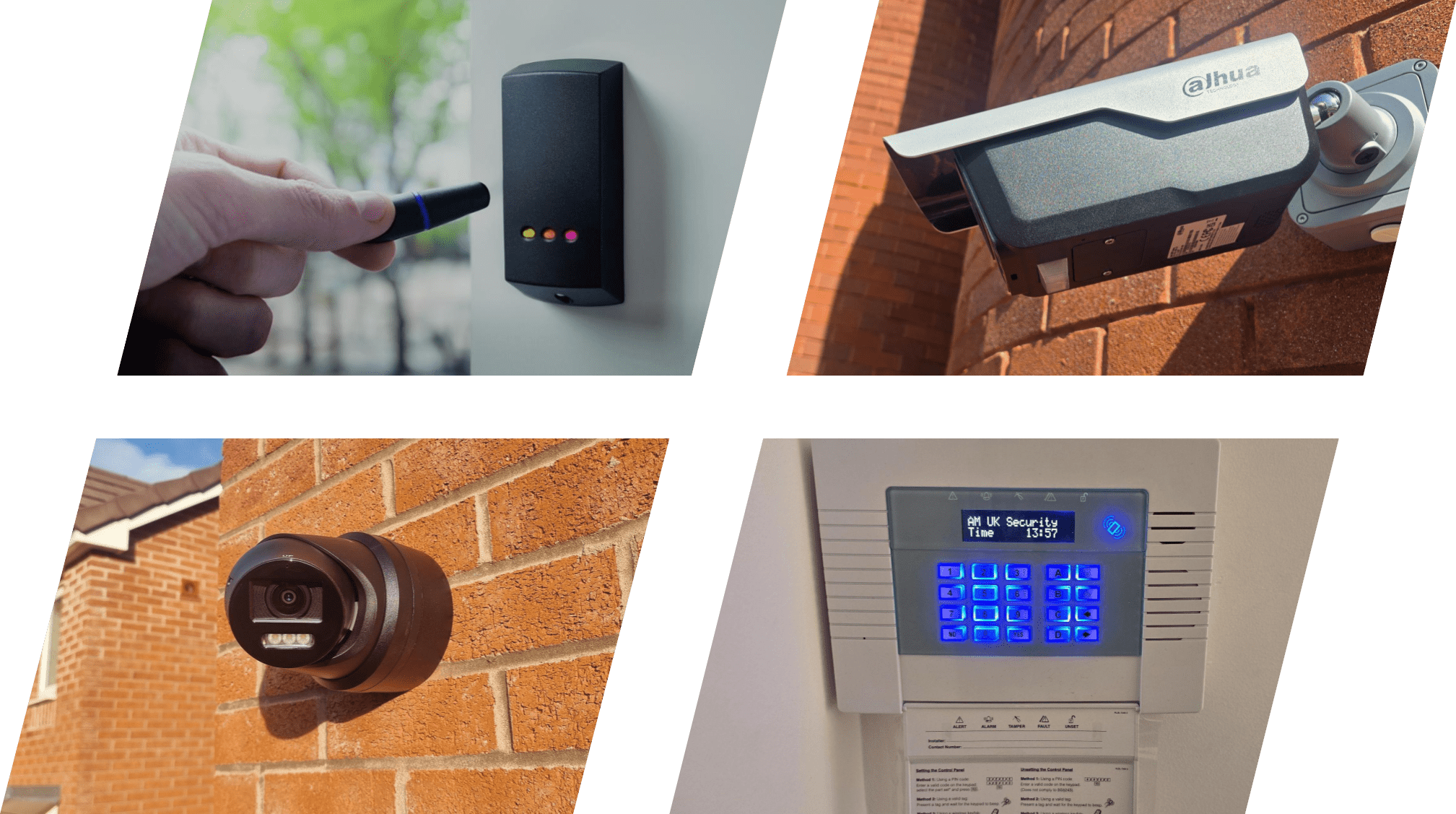
For commercial property managers, business owners, and security teams across the UK, false security alarms are far more than a minor inconvenience. Repeated false triggers lead to keyholder fatigue, unnecessary police or security guard dispatch fees, potential council noise complaints, and worst of all, a dangerous sense of complacency when a real security breach occurs.
Historically, intruder alarms and outdoor camera systems relied almost exclusively on Passive Infrared (PIR) sensors to trigger recordings or alerts. While PIR technology played an essential role in early electronic security, its limitations in modern commercial environments are well-documented.
Today, AI-powered Smart Motion Detection (SMD) and intelligent video analytics have transformed commercial surveillance. In this guide, we evaluate the differences between traditional PIR sensors and modern smart motion analytics, explaining how upgrading your hardware can dramatically reduce false alarms and protect your bottom line.
1. How Traditional PIR Sensors Work (and Where They Fail)
Passive Infrared (PIR) sensors operate by detecting changes in thermal radiation within their field of view. When an object with a temperature different from the ambient surroundings moves across the sensor’s optical zones, the PIR registers a change in heat energy and triggers an alarm.
While effective in simple indoor settings, traditional PIR sensors struggle in complex outdoor and commercial environments due to environmental interference:
- Environmental & Weather Triggers: Wind-blown foliage, falling leaves, heavy rain, and moving shadows caused by clouds can alter ambient thermal levels and trigger a sensor.
- Wildlife Interference: Birds, stray cats, foxes, and insects crawling across sensor lenses frequently cause false alarms outside business hours.
- Thermal Drift: On hot summer days, ambient outdoor temperatures can approach human body temperature ($37^\circ\text{C}$), rendering PIR sensors far less effective or causing unpredictable false trips.
- HVAC and Machinery Drafts: Industrial units with heavy heating, ventilation, or machinery exhaust often create localized heat plumes that trip nearby PIR devices.
Because PIR sensors lack the intelligence to analyze what moved, every detection is treated as a potential intrusion.
2. What Is Smart Motion Detection (SMD)?
Smart Motion Detection (SMD)—often powered by deep-learning algorithms embedded directly within modern IP cameras or Network Video Recorders (NVRs)—replaces simple heat detection with visual identification and classification.
Instead of reacting purely to thermal movement, smart vision algorithms continuously scan video feeds in real time, filtering out background movement and classifying objects into specific categories:
- Human Detection: Recognizes human shape, posture, and movement characteristics.
- Vehicle Detection: Identifies cars, vans, trucks, and motorcycles while ignoring non-vehicle shapes.
- Target Filtering: Automatically filters out animals, swaying trees, weather elements, and shifting lighting conditions.
When an event occurs, the system evaluates whether the object matches defined parameters before triggering an alarm, pushing an app notification, or alerting a remote monitoring center.
3. Key Technological Innovations in Smart Commercial Security
Upgrading to smart motion detection brings several advanced security analytics tools to commercial premises:
Virtual Line-Crossing & Perimeter Intrusion Zones
Rather than monitoring an entire wide-angle field of view, business owners can draw virtual tripwires across key boundaries (such as loading bay perimeters, fence lines, or storage yard gates). An alert is triggered only when a target (human or vehicle) crosses the line in a designated direction.
Smart Dual-Light & Active Deterrence
Modern smart cameras stay in energy-efficient infrared mode until human or vehicle movement is verified. Once a target enters a restricted zone, the camera can automatically activate bright white LED floodlights, sound an audible warning, or trigger a recorded voice message to deter the intruder before damage occurs.
Thermal & Visual Fusion Sensors
For demanding industrial sites, logistics hubs, or perimeter fencing exposed to extreme weather, dual-lens cameras combine thermal heat imaging with visual smart analytics. This hybrid setup ensures total accuracy even in complete darkness, heavy fog, or dense smoke.
4. PIR vs. Smart Motion Analytics: A Quick Comparison
| Feature | Traditional PIR Sensors | Smart Motion Analytics (AI / SMD) |
| Primary Detection Method | Infrared heat variance | Deep-learning visual object classification |
| Object Classification | None (treats all heat movement equally) | Differentiates humans, vehicles, and objects |
| False Alarm Rate | High (triggered by rain, foliage, wildlife) | Extremely Low (up to 95% reduction in false alerts) |
| Perimeter Control | Fixed physical beam coverage | Flexible virtual tripwires & customizable zones |
| Actionable Alerts | Generic alarm trigger | Instant smartphone push notifications with video preview |
| Storage & Search Efficiency | Generates hours of empty, false-alarm footage | Flags relevant clips for rapid forensic video search |
5. The Financial & Operational Benefits of Upgrading
Transitioning your commercial property from legacy PIR detectors to smart motion detection delivers clear operational ROI:
- Eliminate Costly False Alarm Fines: Police forces and private security response providers charge fees for attending repeated unverified alarms. Smart verification ensures security officers are dispatched only when a genuine threat exists.
- Prevent Keyholder Fatigue: Midnight false alarm calls disrupt business owners and facility staff. Reducing false alerts ensures your team responds quickly and decisively when a real alarm sounds.
- Faster Forensic Search: When reviewing footage after an incident, security personnel no longer have to scrub through hours of blank recording. Smart systems allow you to search specifically for “human activity between 02:00 and 04:00,” saving valuable time.
- Optimized Storage & Bandwidth: Smart recording protocols allow IP cameras to stream and store low-bitrate video until target motion is detected, significantly reducing hard drive storage requirements.
Modernize Your Commercial Security Infrastructure
Relying on outdated PIR motion sensors leaves your commercial property vulnerable to frequent false alarms and delayed responses during real security breaches. By integrating AI-driven Smart Motion Detection, you gain precise perimeter monitoring, active threat deterrence, and complete control over your security operations.
At AMUK Security, we design, supply, and install high-performance IP CCTV and smart perimeter detection systems tailored for commercial buildings, industrial warehouses, and retail sites across Warwickshire and the West Midlands.
Ready to eliminate false alarms and upgrade your commercial security?
Contact AMUK Security today to book a comprehensive site survey and sensor evaluation.