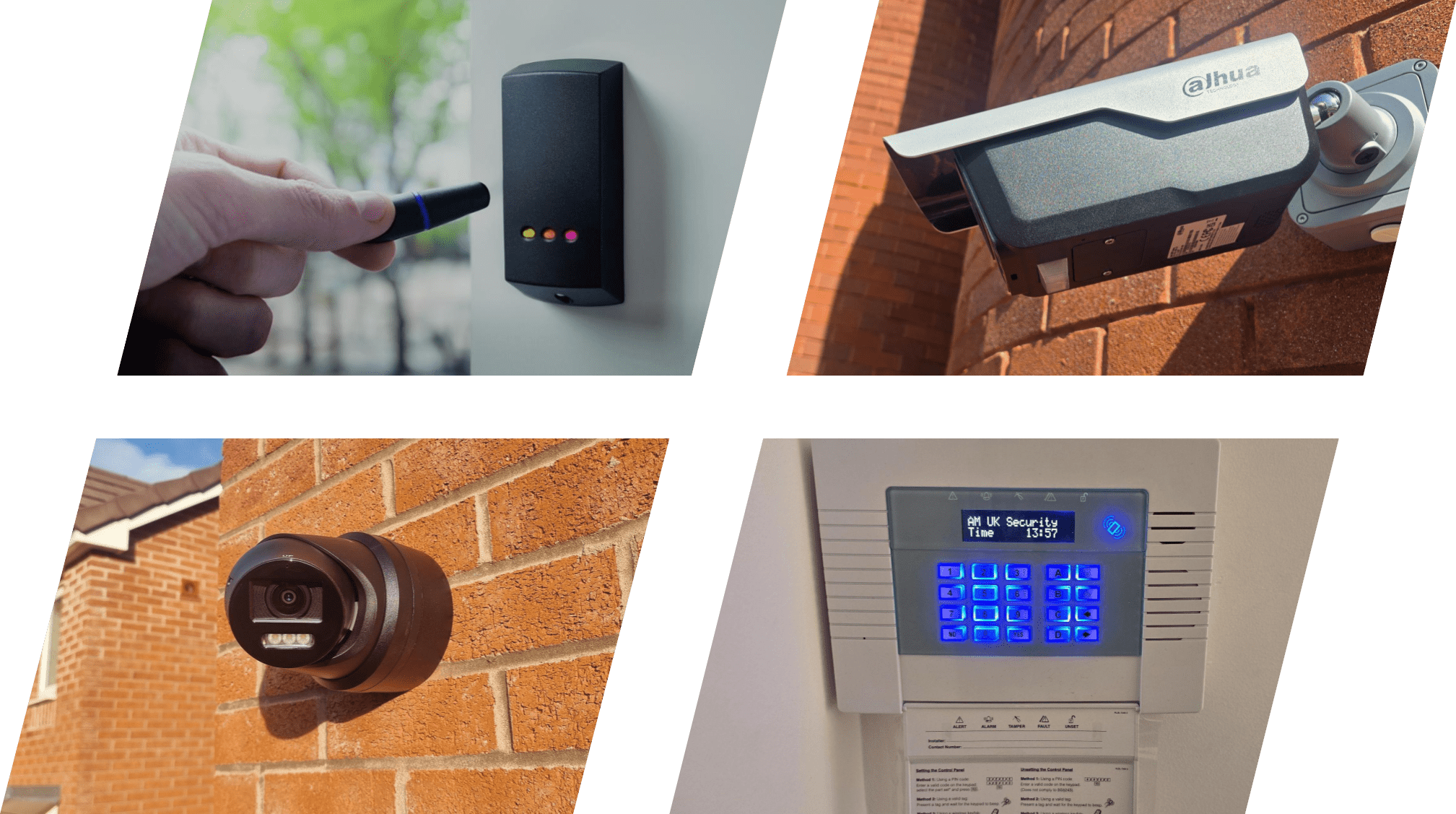
As autumn approaches and daylight hours shrink across the UK, commercial properties face a heightened risk of after-hours security breaches. Reduced natural light and prolonged darkness provide effective cover for trespassers, vandals, and opportunistic burglars.
To maintain robust protection year-round, business owners and facility managers must evaluate how effectively their video surveillance technology performs in low-light and pitch-black conditions. Standard daytime cameras without proper illumination capabilities often produce grainy, washed-out, or completely dark footage when an incident occurs after hours.
In this guide, we compare the three primary night-vision technologies used in modern commercial IP CCTV—Infrared (IR), Full-Color White-Light, and Thermal Imaging—helping you select the right night-vision strategy to safeguard your site during darker evenings.
1. The Low-Light Challenge for Commercial Security
Capturing clear, legally admissible video footage at night presents distinct optical challenges for commercial security systems:
- Image Noise and Motion Blur: In low-light environments, camera sensors attempt to amplify light levels. Without advanced sensors, this results in digital “noise” (pixelated graininess) and severe motion blur, making moving faces or license plates unreadable.
- High-Contrast Glare: Headlights from passing vehicles, bright streetlamps, or security floodlights can blind standard cameras, casting critical surrounding areas into deep shadow.
- Loss of Color Context: Traditional night vision relies on black-and-white recording, removing color details that are vital for police descriptions (such as jacket color, car paint, or bag details).
Selecting hardware tailored to your site’s specific lighting conditions ensures continuous clarity regardless of the time of day or weather conditions.
2. Infrared (IR) Night Vision: Long-Range Covert Protection
Infrared (IR) technology remains the most widely deployed night-vision solution for commercial CCTV networks.
How It Works
IR cameras feature built-in light-emitting diodes (LEDs) that flood the area with infrared light (typically at $850\text{nm}$ wavelength). While invisible to the human eye, this light is picked up by the camera’s sensor, rendering a sharp black-and-white image in complete darkness.
Key Advantages:
- Covert Operation: Intruders cannot see the camera illuminating them, making IR ideal for stealth surveillance around discreet perimeters or dark side alleys.
- Long-Range Coverage: High-power matrix IR LEDs can illuminate distances up to $50\text{m}$ to $100\text{m}+$ across open spaces like car parks, industrial yards, and perimeter fence lines.
- Energy Efficient: Built-in photocells activate IR LEDs only when ambient light drops below a specific threshold, minimizing power consumption.
Limitations:
- Monochrome Output Only: IR footage is rendered in black and white, eliminating clothing and vehicle color context.
- IR Reflection Hazards: IR light reflects heavily off reflective surfaces—such as wet concrete, vehicle registration plates, glass windows, or spider webs—creating bright white “hotspots” that obscure image detail.
3. Full-Color White-Light Illumination: Vibrant Nighttime Clarity
Smart Full-Color (or low-light color) technology represents a significant leap forward in nighttime surveillance, allowing cameras to produce vivid, full-color video 24/7.
How It Works
These cameras combine ultra-sensitive optical apertures (such as $F1.0$ super-apertures) with warm supplemental white-light LEDs. When ambient light levels drop, the camera uses available light or activates soft white LEDs to illuminate the scene in full color.
Key Advantages:
- Full-Color Detail at Night: Preserves vital visual evidence, allowing security teams and police to identify the exact color of clothing, shoes, vehicles, and hair.
- Active Visual Deterrence: The presence of bright, visible white light signals to potential intruders that they are under active surveillance, frequently deterring crime before a break-in occurs.
- No IR Bounce-Back: White-light illumination avoids the reflective glare common with IR lighting on wet surfaces or metal signage.
Limitations:
- Not Suitable for Covert Monitoring: Visible white light reveals camera locations and may not be appropriate near neighboring residential properties where light pollution is restricted.
4. Thermal Imaging: Unmatched Perimeter Detection in Zero Light
For large industrial properties, logistics hubs, and high-value perimeters, thermal imaging offers the ultimate long-range night detection capability.
How It Works
Unlike traditional cameras that rely on visible or near-infrared light, thermal cameras detect heat signatures (thermal radiation) emitted by objects, human bodies, and vehicle engines.
Key Advantages:
- Complete Independence from Light: Thermal cameras operate in pitch darkness, dense fog, heavy rain, smoke, and through light foliage.
- Extreme-Range Intrusion Detection: Human and vehicle heat signatures can be detected across hundreds of meters, making thermal units ideal for tripwire perimeter analytics.
- Zero False Alarms from Weather: Thermal sensors ignore moving shadows, headlights, rain droplets, and swaying tree branches, reducing false alarms dramatically.
Limitations:
- No Facial or Color Identification: Thermal images show heat intensity rather than visual facial features or clothing details. Thermal units are typically deployed alongside visual cameras to combine long-range detection with visual verification.
5. Smart Hybrid Technology: The Best of Both Worlds
Modern commercial CCTV installations increasingly utilize Smart Dual-Light (Hybrid) Cameras. These intelligent units remain in energy-efficient Infrared mode in the dark, maintaining a covert presence.
However, when embedded AI analytics detect a human or vehicle approaching a restricted boundary, the camera automatically switches to bright white-light illumination and full-color recording. This delivers an immediate visual deterrent while capturing high-definition, color video evidence of the intruder.
Prepare Your Commercial Site Before Darker Evenings Arrive
Upgrading your commercial security lighting and camera technology before autumn ensures your premises stay protected through the darkest months of the year. Strategic hardware choices prevent blind spots, reduce false alarms, and deliver actionable evidence when you need it most.
At AMUK Security, we design and install tailored commercial IP CCTV setups equipped with advanced IR, full-color white light, and thermal imaging solutions across Warwickshire and the West Midlands.
Is your commercial night-vision protection ready for the autumn and winter months?