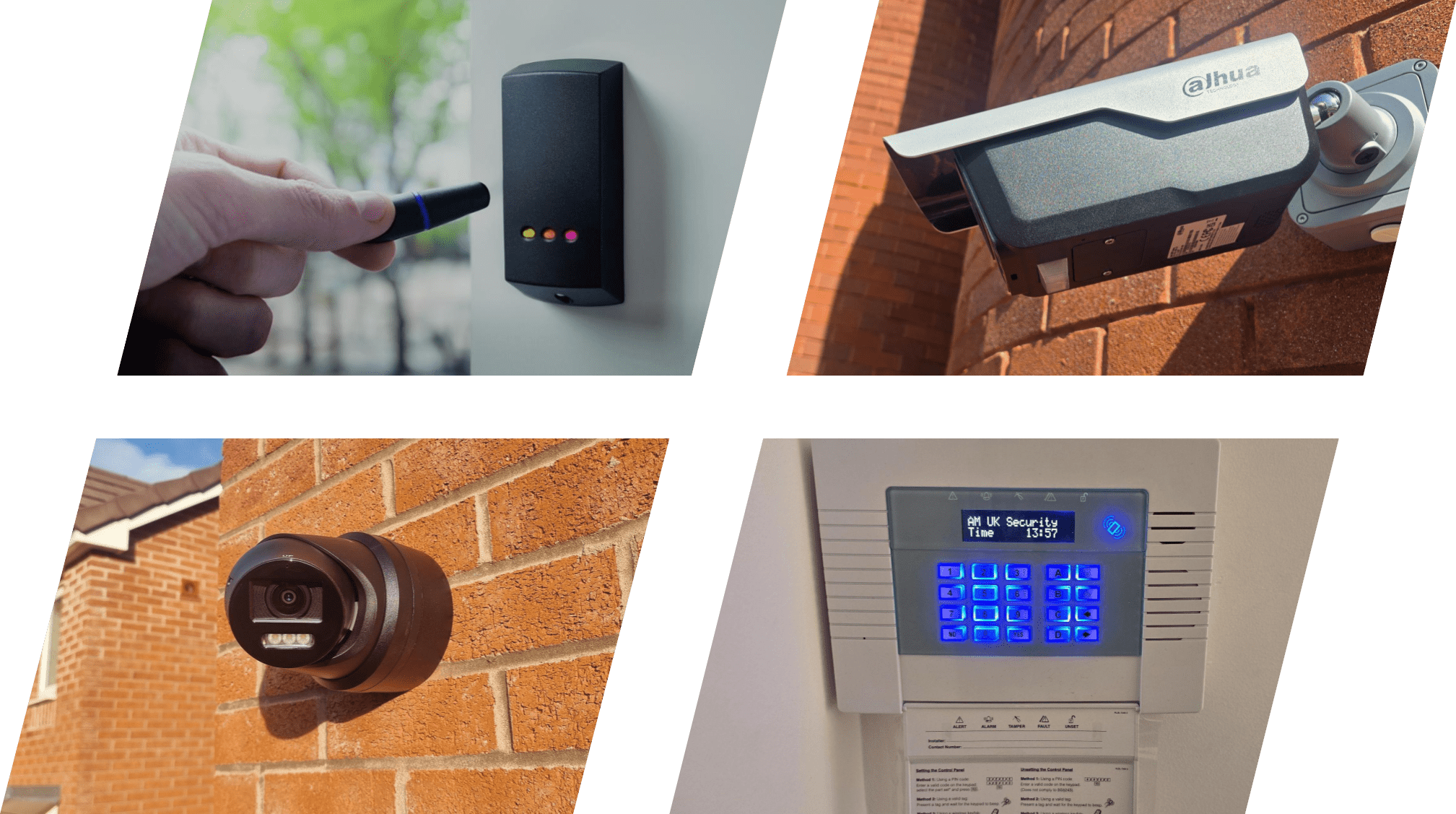
Warwickshire is renowned for its rich architectural heritage—from timber-framed Tudor homes in Stratford-upon-Avon to grand Victorian villas in Leamington Spa and honey-coloured Cotswold stone estates across the local countryside. However, protecting a historic or listed property presents a unique security challenge: how do you deploy high-performance video surveillance without damaging historic building fabric or disrupting irreplaceable interior aesthetics?
When upgrading security for period homes and heritage commercial properties, property owners face a fundamental hardware choice: wireless CCTV systems vs hardwired Power over Ethernet (PoE) installations.
In this guide, we evaluate the pros, cons, and technical realities of wireless and hardwired CCTV for Warwickshire’s historic properties, helping you balance architectural preservation with uncompromised site security.
1. The Architectural Challenges of Period & Listed Buildings
Modern security equipment is built for standard contemporary construction, but historic properties operate under entirely different physical and regulatory rules:
- Thick Solid Stone & Timber Framing: Lias limestone, red sandstone, and solid brick walls—often exceeding $50\text{cm}$ to $1\text{m}$ in thickness—present massive physical barriers to electronic signals and cabling alike.
- Listed Building Consent & Conservation Rules: Grade I, Grade II*, and Grade II listed structures in the UK are strictly protected by local planning authorities. Drilling unauthorized holes through historic stonework, decorative plaster, or ancient timber frames can lead to legal penalties and enforcement notices.
- Aesthetic Preservation: Exposed surface-mounted plastic trunking or bright white modern plastic camera enclosures can ruin the visual character of a period facade or historic garden courtyard.
Overcoming these obstacles requires selecting the right system topology and using specialist installation methods tailored to heritage architecture.
2. Wireless CCTV for Historic Homes: Advantages and Limitations
Wireless CCTV systems send video data over Wi-Fi ($2.4\text{GHz}$ or $5\text{GHz}$ radio frequencies) or dedicated wireless links, significantly reducing the need to run data cables through interior spaces.
The Pros:
- Minimal Physical Disruption: Because data transmission is wireless, there is no need to drill extensive cable pathways through historic internal plaster, oak panelling, or decorative flagstones.
- Flexible Placement: Wireless units can be positioned in sensitive locations where running physical cables is structurally impossible or prohibited by conservation guidelines.
- Faster, Less Intrusive Installation: Installation teams spend less time inside the main living areas, minimizing disruption to historic interiors.
The Cons:
- Severe Signal Attenuation: Dense Lias stone, lime mortar, and metal foil insulation act as powerful RF shields. Standard Wi-Fi signals struggle to penetrate thick interior period walls, leading to dropped video frames or lost connections.
- Power Cables Still Required: “Wireless” refers to data transmission, not power. Unless cameras are battery-powered, each unit still requires a local power connection.
- Battery Maintenance Issues: Battery-powered consumer cameras require regular recharging or battery replacements, which can become problematic if cameras are mounted at high, hard-to-reach eaves. Furthermore, cold UK winter temperatures significantly degrade battery life.
- Bandwidth Limits: High-definition 4K video streams require high, consistent data throughput that standard wireless networks struggle to support across multiple cameras simultaneously.
3. Hardwired PoE CCTV: Uncompromising Security and Reliability
Hardwired IP CCTV systems utilize Power over Ethernet (PoE) technology, where a single Network Cable (Cat6) delivers both high-speed data transmission and electric power directly to each camera from a central recorder.
The Pros:
- Rock-Solid Reliability: Hardwired connections are entirely immune to wall thickness, Wi-Fi interference, or weather-induced signal loss. Video streams remain constant and uninterrupted 24/7.
- Maximum Resolution & Continuous Recording: PoE cables easily carry uncompressed 4K or 8K video data, supporting continuous recording without draining batteries or choking wireless networks.
- Zero Battery Care: Powered directly from a central Network Video Recorder (NVR) with UPS battery backup, hardwired cameras stay fully operational even during localized grid power outages.
The Cons:
- Complex Cable Routing: Running Ethernet cables through historic structures requires skilled engineering, painstaking planning, and specialized heritage installation techniques.
- Potential Structural Impact: If not performed by experienced security engineers, cable routing risks damaging delicate lime plaster, timber joists, or brickwork.
4. Specialist Heritage Installation Techniques: How AMUK Security Bridges the Gap
Choosing hardwired security does not mean sacrificing your property’s aesthetic integrity. By utilizing specialist heritage installation methods, a hardwired IP setup can be rendered virtually invisible:
- Discreet Heritage Cabling Routes: Utilizing existing floor voids, disused chimney flues, roof spaces, and external rainwater lead pipes to conceal Cat6 cabling without altering visible historic surfaces.
- Mortar Joint Routing: Exterior cabling is neatly tucked into mortar joints between bricks or stone blocks using color-matched heritage mortars and custom painted, micro-diameter cabling.
- Bespoke Color Matching & Mounting Extensions: Camera enclosures and mounting junction boxes are custom painted or finished in bespoke RAL colors to blend seamlessly with Warwickshire stone, dark timber, or heritage render.
- Point-to-Point Wireless Bridges for Outbuildings: For detached garages, stables, or perimeter entrance gates, high-power directional radio links (Point-to-Point wireless) can bridge the gap across courtyards without trenching historic cobbles or lawns.
5. Decision Matrix: Which System Should You Choose?
| Property Type & Need | Recommended Solution |
| Listed Grade I or II (Strict Preservation Requirements)* | Hybrid Setup: Hardwired main hub with discreet mortar-routed PoE for key perimeters, supplemented by Point-to-Point wireless links for outbuildings. |
| Period Home in Conservation Area (Unlisted) | Fully Hardwired PoE: Concealed internal cable routing via floorboards and lofts delivering maximum 4K video quality and zero signal drops. |
| Detached Outbuildings, Barns, or Gatehouses | Point-to-Point Wireless Bridge: Transmits gigabit data wirelessly across open land to a hardwired central NVR. |
Protect Your Heritage Property Without Compromise
Preserving the character of a period property should never come at the expense of your family’s safety or business security. With expert planning and specialized installation techniques, you can enjoy crystal-clear 4K surveillance while honoring your building’s architectural history.
At AMUK Security, we specialize in designing and installing bespoke, low-impact security systems for listed buildings, period homes, and heritage estates across Warwickshire, the West Midlands, and the Cotswolds. Our certified engineers work in close alignment with property owners and conservation guidelines to deliver invisible, high-performance protection.
Looking to secure a period home or listed property in Warwickshire?
Contact AMUK Security today to schedule a sensitive, low-impact heritage site survey.